RIP Asha Bhosle: India’s voice for every mood falls silent
With an estimated12,000 songs, mostly in Hindi but also in some 20 other languages, Asha Bhosle had an incredible career.
PTI
-
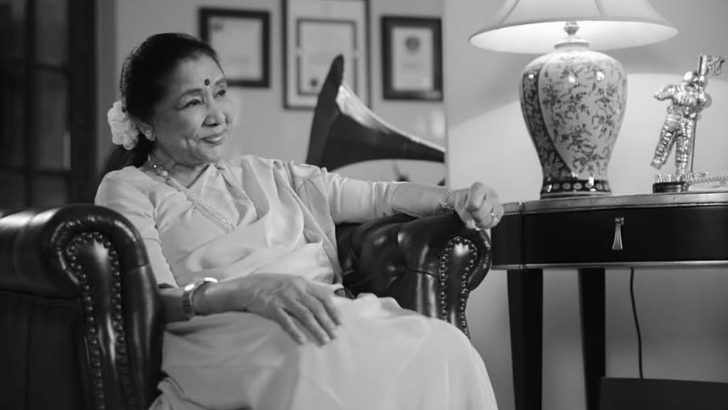
What set Asha Bhosle apart was not just longevity but her reinvention of herself (Instagram/AshaBhosle)
Mumbai, 12 April
Hers was the voice of sass and soul that struck a million emotive chords down generations, the one they woke up to in the morning, tuned into at night, romanced and mourned loves that were never to be and yes, jived and rock and rolled to.
Asha Bhosle was 92. One half of the Mangeshkar sisters who together became the
voices that not just embodied Hindi singing for close to seven decades but an
India keeping step with the global times.
Two legends, two distinct journeys
It should be difficult to separate the Lata-Asha careers but it is not. Two voices that ruled the subcontinent, representing a pan identity that knows no borders. And both now gone, both at 92. While the elder got the stardom first, feisty Asha soon followed suit. Not just sharing the spotlight but expanding its limits, making it her very own with verve and astonishing versatility.
Humari saans nahi hoti toh aadmi mar jata hai, mere liye music meri saans hai. (A person dies if they can't breathe. For me, music is like breathing). I have spent my life with this thought," she told PTI ahead of her 90th birthday in 2023.
Versatility across genres
Asha was the one who got listeners dancing away to the breathless ‘Aaja, Aaja’ and also sit back in reflective pause with the classical ‘Justuju Jiski Hai’. Both performed with equal felicity.
What set Asha apart was not just longevity – she sang for more than eight decades -- but her reinvention of herself. From black-and-white cinema to global stages, from vinyl to streaming, she stayed relevant by constantly evolving her sound. From Meena Kumari and Madhubala to Kajol and Urmila Matondkar, the roster of heroines kept changing. Asha stayed on as a continuum linking the past to the present.
The images will live on. The singing star, always in a sari, a bindi firmly in place and her hair tied neatly in a bun. And gamely dancing to “Ek Mein Aur Ek Tu” well into her 80s and most memorably to “Tauba, Tauba”, recreating Vicky Kaushal’s signature hook step at a Dubai concert in 2024.
With an estimated12,000 songs, mostly in Hindi but also in some 20 other languages, it’s an incredible career, impossible to take in at one go.
Early life and first steps in music
For Asha and her siblings – Lata, Usha, Meena and Hridayanath – music was not just their calling but also perhaps their destiny. While Lata and Usha were singers, Meena and Hridayanath are composers.
Born in 1933, Asha was trained in classical music by her father, Dinanath Mangeshkar, just as her brothers and sisters. She recorded her first song at just 10 after her father’s death. It was the Marathi song ‘Chala Chala Nav Bala’ for ‘Majha Bal’ in 1943. The Hindi film debut was ‘Saawan Aaya’ for ‘Chunariya’ in 1948. Her early years in the industry were marked by struggle: typecast into singing for second-tier productions and overshadowed by her already famous sister.
Breakthrough and rise to fame
But Asha did something unexpected. She reinvented the very idea of a playback singer.
Her breakthrough
came in the 1950s, especially through her bold and peppy songs with composer OP
Nayyar. At a time when playback singing leaned heavily toward classical purity,
Asha introduced flair, attitude, and a modern edge. She became the voice of
club songs, cabaret numbers, and youthful romance.
The next phase of her career was even more transformative. Her partnership with R D Burman redefined Hindi film music in the 1960s and 70s. Songs like ‘Piya Tu Ab To Aaja’ and ‘Dum Maro Dum’ showcased her unmatched versatility. Her voice could be sensuous, playful, rebellious, romantic, plaintive, but always deeply expressive. Asha mastered ghazals (‘Dil Cheez Kya Hai’), classical-based compositions, pop, and even international collaborations. Her achievements are formidable: multiple National Film Awards, numerous Filmfare Awards, and the Dadasaheb Phalke Award, India’s highest recognition in cinema. She also received the Padma Vibhushan.
Early marriage and struggles
Perhaps the longest performing singer in global music history, Asha’s personal life mirrored the bold choices of her professional life.
Always the rebellious one, she got married to Ganpatrao Bhosle in 1949 when she was just 16 against the wishes of her family. The marriage was a disaster but Ganpatrao pushed Asha to be a singer. By the time the marriage ended, Bhosle had two children and was pregnant with her third one. She later said that it was was an abusive marriage.
She came back to her family home and continued her musical career, first only getting songs for vamps and dancers, only occasionally getting to sing one or two numbers in hits like Raj Kapoor’s ‘Boot Polish’ where she sang the popular number ‘Nanhe Munne Bachche’.
Turning point in career
Her career took an upswing when Nayyar gave her a break in ‘Naya Daur’ where she sang for Vyjayanthimala. The song was ‘Maang Ke Saath Tumhara’. It went on to open many doors in the industry for Asha who sang in “Waqt” and “Gumraah”.
Later in life, Asha
married RD Burman, the composer that she worked with in most of her later hits.
‘Umrao Jaan’ and ‘Rangeela’, two movies across decades are a standout example
of her mastery over genres – ‘Dil Cheez...’ at one end of the spectrum and
"Tanha Tanha" on the other.
“I think I’ve given a lot to music. I've sung different Indian songs. I feel good that I’ve come out of difficult times, many times I felt I would not be able to survive (but I did). “…I faced difficulties but today when I look back, it all looks ‘mazedar’ as I came out of it,” she told PTI in 2023.
Some songs perhaps stand out more than others in the formidable Asha playbook. ‘Maang Ke Saath’, ‘Abhi Na Jao Chhod Kar’, ‘Piya Tu Ab Toh Aaja’, ‘Dum Maaro Dum’ and ‘Mera Kucch Saman’ being just some of them.
But then Asha was never content to be only a voice for the movies. In the 1990s, she made waves internationally, lending her voice to Boy George's "Bow Down Mister" and singing with boy band Code Red.
Her first Grammy nomination that year came for "Legacy", a classical album recorded with sarod maestro Ustad Ali Akbar Khan.
She embracedIndipop with the same fearlessness.
She also collaborated with Adnan Sami on ‘Kabhi To Nazar Milao’ and with Australian cricketer Brett Lee on ‘You Are the One for Me’ and ‘Haan Main Tumhara Hoon’. Constantly reinventing herself, Asha made her presence felt on social media as well. Her Instagram account has over 7.5 lakh followers.
Share Now

Leave a Reply
Your email address will not be published. Required fields are marked *
Other Stories
.png)
.png)

.png)

.png)
.png)